
History
Shaw Island, Camp Cedar Rock
History and stories from the beloved, legendary 1970s San Juans summer camp
THIS EXCELLENT PAGE was written and assembled by MLC alumnus Jevan Williams, who waded in with hard work, strong personal interest, and rich historical memory. He tells his own story and the history of Cedar Rock, and he incorporates stories and photos from all Shaw Island alumni he spoke with or heard from (there is room for more!). Jevan attended MLC from 1968 to 1975.
First, some history and context of Shaw Island and how Camp Cedar Rock came to be ....
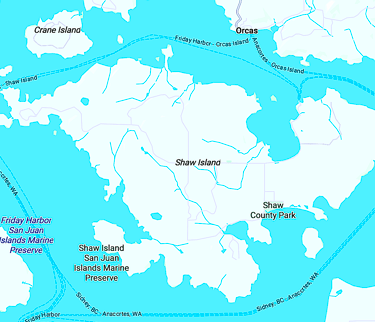
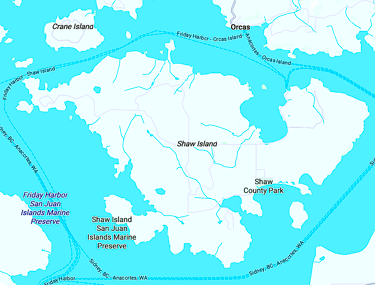
Shaw Island, located between Orcas and Lopez islands in central San Juan County, is the smallest of the San Juan Islands serviced by the Washington State Ferry System. With an area of 7.7 square miles and a population of 165, the island maintains a self-sufficient community with limited amenities.
Shaw Island Amenities and History
The island's few commercial amenities are simple:
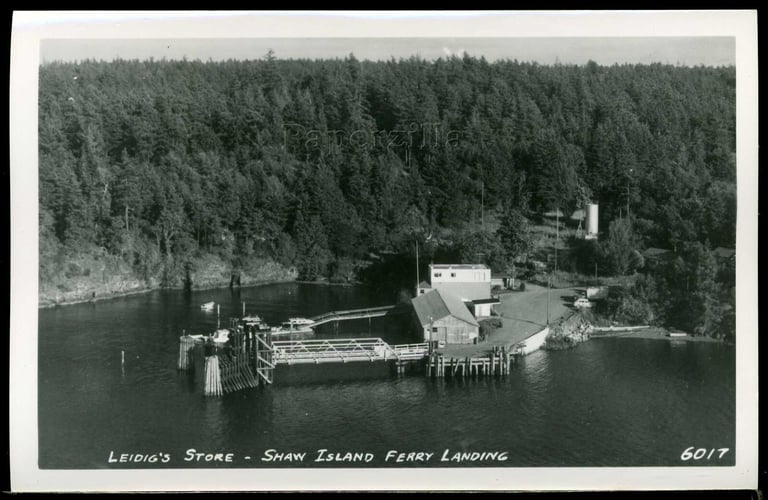
A historic general store and a post office, situated at the ferry landing.
A library and museum near the center of the island, opened in 1970.
A County Park.
A two-room schoolhouse.
Adventures to Victoria
We took several trips to Victoria, at least one every summer. Yes, that includes the famous trip where all the grungy camp kids piled into a couple of rooms at the grand Empress Hotel, a place where Queen Elizabeth had stayed. Most people slept on the floor, but I think I got a piece of a bed; I don’t remember why or how many or who shared the bed. My recollection is that once John talked the manager into honoring our reservation, the staff treated us like any other guests, which makes me laugh to this day. I’ve stayed there as an adult; it’s a nice hotel right on the harbor, but that camp trip was something else entirely.
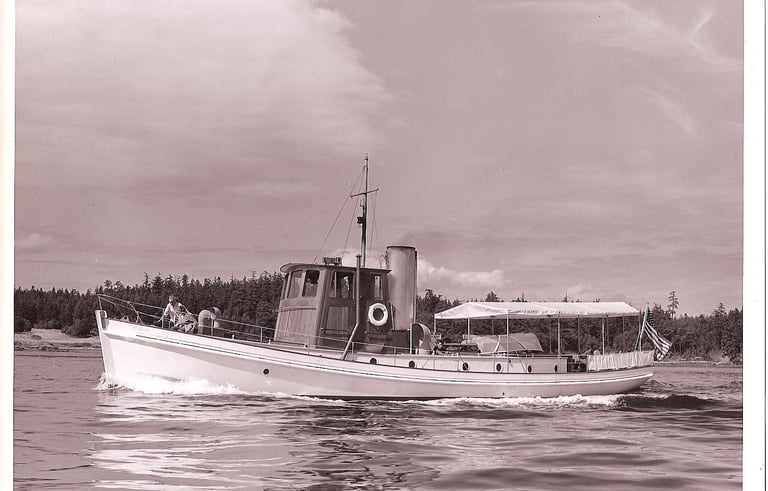
The Steam Ship Oceanid
Others likely have more vivid memories of the Steam Ship Oceanid, but what a lot of maintenance it required. Built in 1946 to help clear English harbors of mines, she was constructed mostly of teak, not steel. At about 60 feet long, she had a top speed of about 10 knots and a range of 250 miles. The trip to Victoria (roughly 30 nautical miles) took about four hours of cruising, but it took six to eight hours just to get the steam engine running.
John loved playing Captain, but the real “yeoman’s work” was in the engine room. Moody was the name of the man Bob Ellis employed to Engineer and Captain the ship and do the extensive maintenance required at the dock. Several other people had a hand in keeping the beautiful, nightmarish ship seaworthy, and along with Moody they are the real heroes of the Oceanid story. A few times she almost went down, including a couple of times when Moody was nearly overcome by the heat of the engine room, which would have been our tragic end, or at least the end of the Camp. I believe the plan was for each group of campers to get an excursion—around the island, to Friday Harbor, Lopez, or Orcas, or occasionally to Victoria. Keeping her ready every 10 days or so was a constant struggle that I was glad I had no part of. I believe some cohorts of campers missed out because the ship was not seaworthy during their camp time. She was an amazing part of the Camp experience! The Oceanid was scrapped in 2024 and there has been some effort to save her boiler but the boat is gone.
Shaw Island was named "Shaws Island" by the Wilkes Expedition in 1841 in honor of Capt. John D. Shaw, a distinguished American naval officer from the War of 1812. The Lummi people called the island Scom-em-ana, named after small, oily fish. The island has a history of Nuns that, coincidentally, I think, mostly occurred after Camp Cedar Rock was gone.
Cedar Rock Preserve
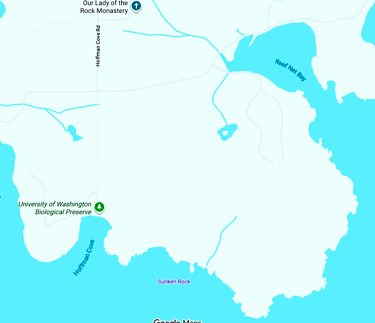
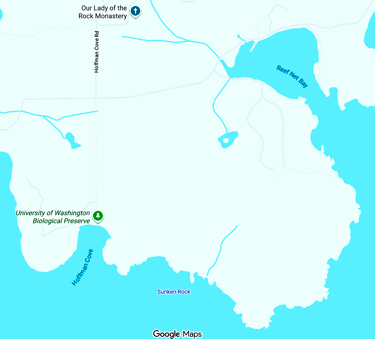
From the Shaw Island Ferry Terminal take Blind Bay Road, turn left onto Hoffman Cove Road, and when you come to the end of the road, turn left; you’ve arrived at the Cedar Rock Preserve, former site of Camp Cedar Rock.
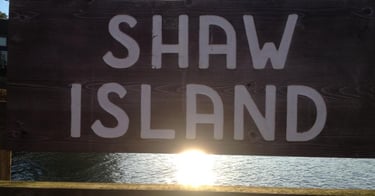
Ferry terminal and store; welcome sign.
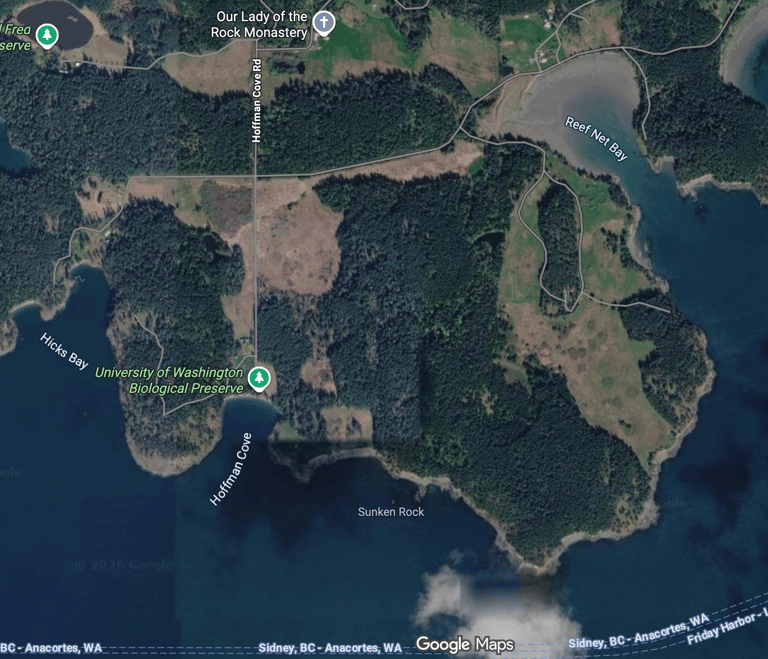
The Cedar Rock Preserve is a 370-acre property composed of 12 contiguous parcels, gifted to the University of Washington by Robert Ellis between 1973 and 1986. This preserve lies on the south-central shoreline, bordered by Reef Net Bay (formerly Squaw Bay) to the east and the Upright Channel to the south.
The preserve features a diverse landscape:
Upland areas: A mosaic of second-growth, Douglas-fir-dominated mixed forest, rocky balds, old fields (previously used for farming and an airstrip until the mid-1970s), several orchards, and a small central pond.
Shoreline: 2.3 miles of low-bank bedrock, interspersed with gravel and cobble beaches.
Road access to the preserve is available via Hoffman Cove Road or Reef Net Bay Road (formerly Squaw Bay Road).
The Camp Cedar Rock Benefactor
Robert Hale Ellis, Jr. (1914-1982) was a prominent Portland landscape architect, landowner, and philanthropist with significant ties to Shaw Island in Washington state. Born in Portland, Oregon, Ellis earned his undergraduate degree from Reed College in 1937 and a graduate degree from Harvard University. During World War II, Ellis served as an army engineer across the Yukon, New Guinea, the Philippines, and Japan. He later returned to Portland to establish his career as a landscape architect, designing numerous gardens and planting schemes primarily during the 1940s and 1950s.
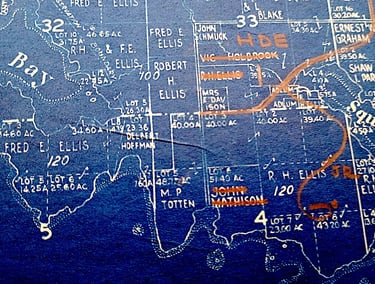
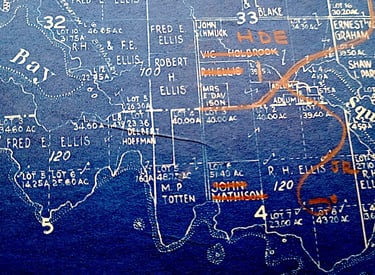
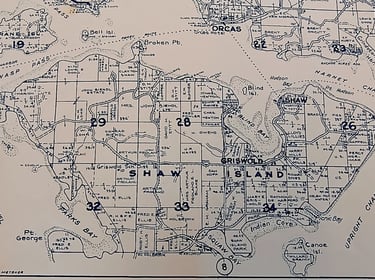
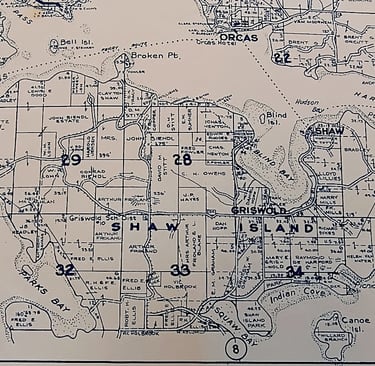
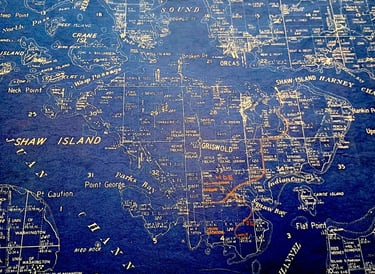
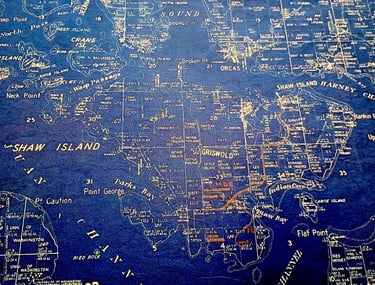
Ellis and other members of his family owned substantial portions of Shaw Island. Materials from the 1950s and early 1960s, including a Robert Ellis architectural drawing of Shaw Island, show the names of property owners and illustrate the various Ellis family members' considerable and growing holdings; the materials are a treasure trove of history preserved at the Oregon Historical Society in downtown Portland. His own house was situated on one side of Hoffman Cove, with Camp Cedar Rock located on the opposite side.
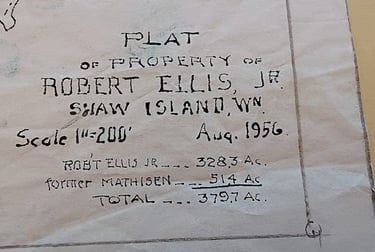
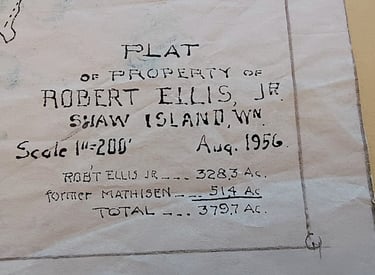
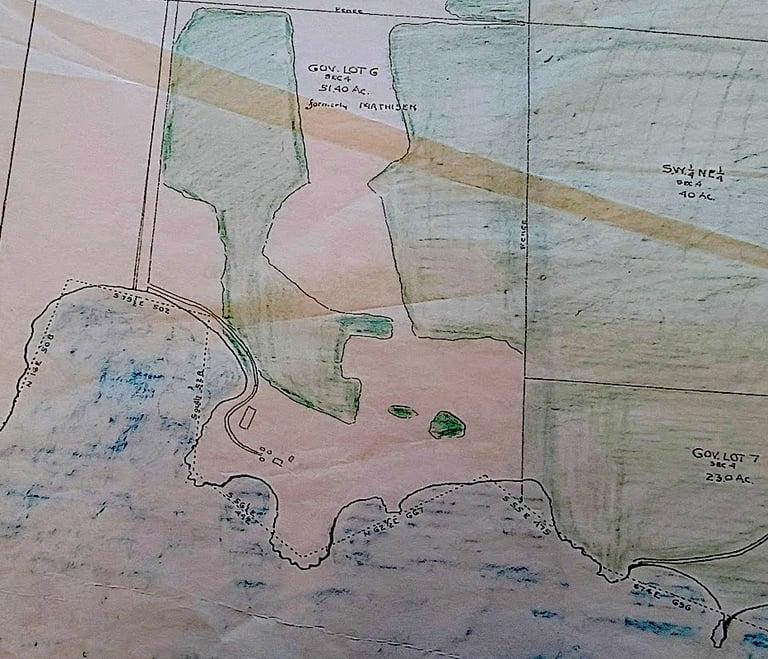
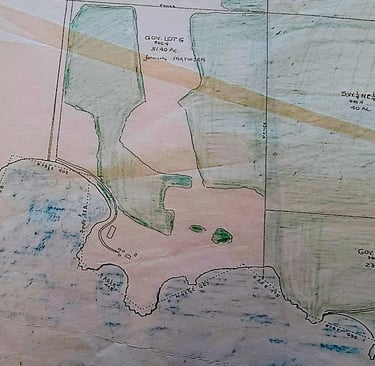
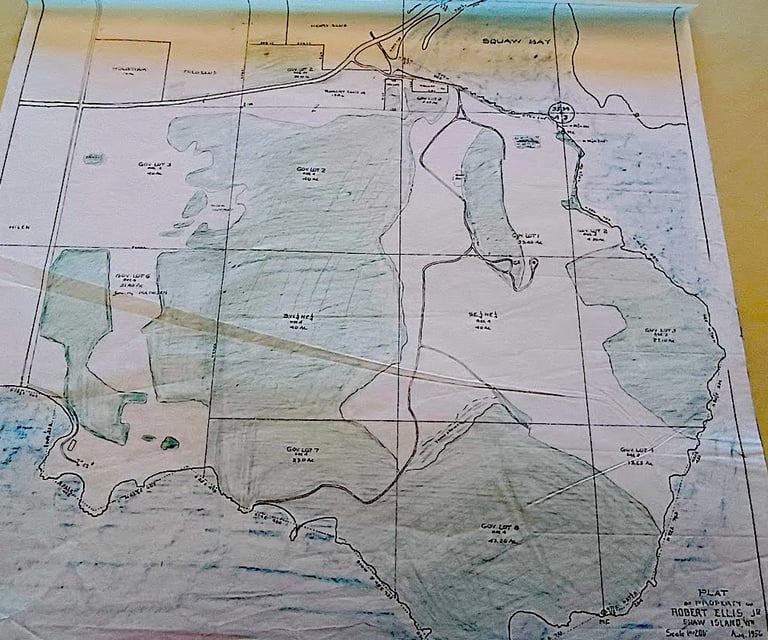
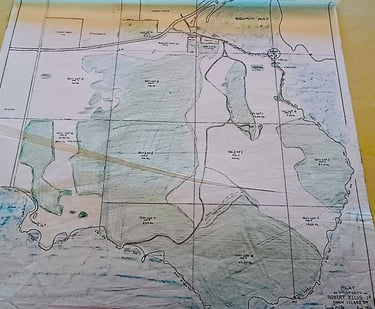
Robert Ellis's 1956 architectural drawing of southern Shaw Island; detail of Hoffman Cove and Cedar Rock site; legend detail; satellite photo and Google maps of Cedar Rock area and Shaw; blueprint maps ca. 1956 showing Shaw Island landowners' names; detail showing Robert Ellis's purchase.
An active community member and avid conservationist, Ellis served on the board of the Oregon Historical Society during the 1950s and 1960s and was involved with organizations such as the Mazamas, the Oregon Roadside Council, and the Portland Garden Club.
His philanthropic legacy includes:
Endowing a faculty position at his alma mater, Reed College.
Establishing a fund in memory of his parents for the acquisition of contemporary art at the Oregon Art Institute (now the Portland Art Museum).
Bequeathing his residence, the George W. Collins house, designed by A. E. Doyle in 1907, to the Oregon Health & Science University for use as the president's residence.
Donating the 370-acre parcel on Shaw Island to the University of Washington as a nature preserve.
Robert Ellis Jr. died in Portland in 1982.
[Sources: Robert Hale Ellis, Jr. architectural papers, Coll 247, Oregon Historical Society Research Library; some information from en.wikipedia.org/wiki/Shaw_Island and from archiveswest.orbiscascade.org/ark:80444/xv14306, used under Creative Commons attribution—ShareAlike 4.0 International License.]
How Camp Cedar Rock Came to Be
For the purposes of our story, the Angell family—John and Adelaide (Adi), John Jr. (“Demi”), Karen, Wendy, Gail, and Townsend (Towny)—lived near the Ellis family on SW Montgomery Drive in Portland and socialized with them. I believe both families were Unitarian Church members as well.
It would take a few additional catalyzing events for Camp Cedar Rock to come into being.
One was the founding of MLC in September 1968.
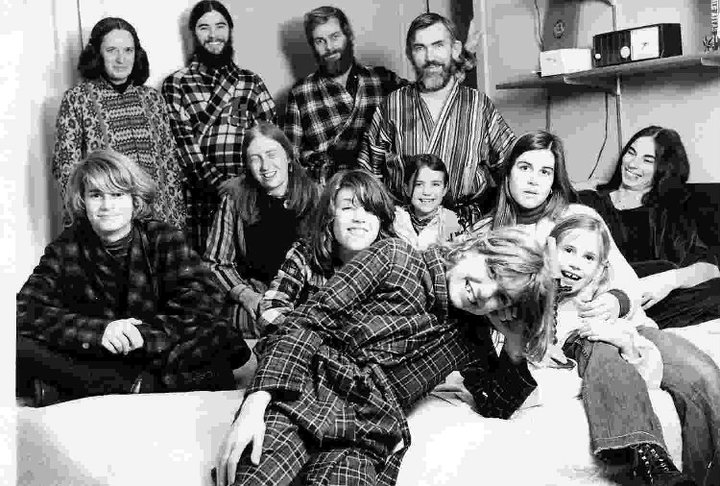
Another was the founding of the commune known as "The Shire,” which was initially the Angells, the Leas, and the Williams, in 1969, usually also hosting an MLC aide from Beloit or Antioch college. When I say the Camp was formed around my dining room table, I mean it quite literally.
Conversations about Bob Ellis’s Shaw Island property and whether it could support a camp led to John Angell, Malcolm Lea, and Dave Williams taking a few scouting trips to the island and meeting with Bob Ellis and the caretaker on site to discuss the infrastructure. The first time I saw Shaw Island and Cedar Rock was sometime in 1969, maybe in September, when Tom Lea and I were invited along on one of these trips.
John Angell was and very much enjoyed being the driving force and the public face, but his wife Adi was the calming steady hand, and her Unitarian Church connections led many to MLC and to Shaw. Malcolm and Sheila Lea, Rosemary and Dave Williams, were all founding “partners” and each of them had their role. Several others were involved, and of course Bob Ellis was the one person who made it possible.
The Shire gang.
It was determined that a summer camp was feasible, and Bob Ellis agreed to the low-impact use of the land that was his vision. Although Camp Cedar Rock can be seen as an extension of MLC, and the vast majority of the attendees were from MLC, it’s a slight misnomer to say it was an MLC summer camp as it was open to all kids who went to school in Northwest Portland. All schools were represented, but MLC kids were certainly the majority of each cohort, with Couch kids the next largest contingent; Chapman sent some, and it seemed Cathedral parents might have been reluctant to send their children as there were few of them.
Anyway, the summers of 1970-1972 saw Camp Cedar Rock welcome campers for six ten-day sessions each year with about 30 campers per session. With about ten counselors, the six adult founders, and a few others, the thought was that “around 50” people would be at Camp Cedar Rock at any one time.
It turned out that some campers stayed for multiple sessions, and additional adults came as teachers, helpers, volunteers, etc., and some brought their families and stayed the summer. Some came for shorter periods of time, but generally speaking there were well over 100 people occupying the land (my guess is that 200 to 250 was often closer to the truth), along with several vehicles, whereas the original agreement with Bob Ellis was for around 50 people and "a few” vehicles.
Now, on an Island of about 150 full-time residents, most of whom liked the quiet of Shaw, making an occasional trip to Friday Harbor for supplies or gas (because there’s no gas station on Shaw) or the “big city feel” that a town of about 800 might bring, this outside world of 200 or so “hippies” and their comings and goings took some getting used to. Some residents mentioned it to their neighbor Ellis, and it may have been a subject around the Ellis family table; there were several conversations at the Shire, with various strategies discussed to either minimize contact with residents or increase their buy-in.
Eventually this may have been what led to the demise of Camp Cedar Rock as Bob Ellis felt that stewardship of the land was taking a backseat to the camp experience and he decided to donate the land to the University of Washington as a preserve, the Steam Ship Oceanid to the Sea Scouts. I’m told the land looks fairly similar now, which is a testament to his vision.
Perhaps the idea had run its course anyway; maybe the grant money dried up, perhaps the founders were burned out and wanted to do something else with their summers, and the three founding couples were in various stages of uncoupling: John soon left MLC and moved to Puerto Ángel, Mexico (eventually, Malcolm Lea retired to Shaw Island). Probably it was a combination of these things; anyway, the time had come and gone and Camp Cedar Rock was finished.
Other than facts cribbed from other sources, and with much thanks to Scott Daniels of the Oregon Historical Society’s research library for help with background information on Bob Ellis, all of the above is from the memory of my (roughly) 10 to 12-year-old self and I’m open to correction or addition from anyone who has anything to add.
My Shaw Experience
Whether the general mechanics of memory are to blame or simply the way my own mind works, I tend to recall my "Shaw Island years" in broad strokes or small, vivid vignettes, with very little in between.
First off, my experience was different from the average camper's. I was there for the entire summer all three years, as well as spring breaks and a few other trips. Other than the adult Angell children, I was among the older, "resident" kids and was more or less free to do what I wanted. Our parents were engaged in running the camp, so we were, even more than the other campers, pretty free-range.
Exploring Puget Sound
There was a crusty local named Don (last name unknown) who, for whatever reason, took a liking to me. A couple of days each week, he would pick me up on his boat and take me fishing. He taught me about tides, fishing techniques, and marine life. Sometimes he allowed me to bring a friend along on our adventures, but mostly it was just the two of us in his boat. My memory is that we almost always caught something, often in or near kelp forests, bottom fishing for rock cod, ling cod, halibut, and flounder. Occasionally we snagged sea cucumbers, urchins, or starfish. Sometimes we’d catch a spiny dogfish, and Don taught me to avoid their venomous spines; it was kind of cool to catch a shark! We’d sometimes fish for salmon, but as I remember it, Don thought salmon were fine for eating but preferred the challenge of fishing for other species. He had some crab pots which we pulled on occasion, and I loved seeing the Dungeness crabs in the traps. He also had me caddy for him a couple of times each summer at golf tournaments on San Juan Island, which always ended with a large salmon feast where Don seemed to know everybody. I believe every golf tournament featured me piloting the boat back to Hoffman Cove while Don slept off the effects of a hard day of golfing.
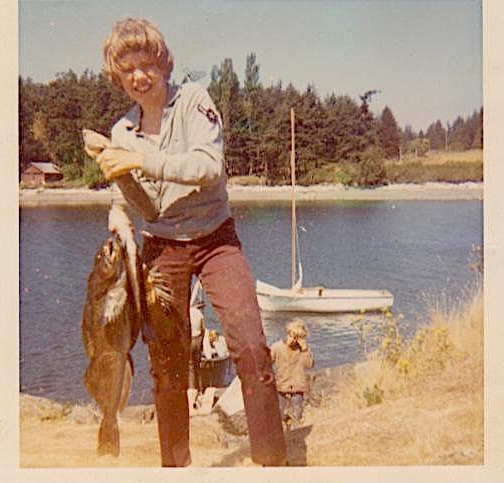
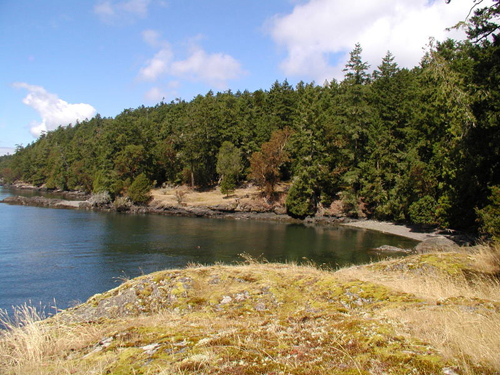
Jevan with fish; Hoffman Cove, present day.
I think I was supposed to ask before taking a camp boat, but I don’t think I always did. The Boston Whaler was the fastest vessel in the fleet and was reserved for emergencies, so that was generally off-limits, but the various other vessels were more or less at my disposal.
On my many seafaring trips, solo or with others, I saw and learned to identify Harbor Seals, California Sea Lions, and Steller Sea Lions, as well as Harbor and Dall’s porpoises, and River Otters. Kelp forests are amazing, and I loved just hanging out in or near them. Kayaks, sailboats, rowboats, and slow-moving motor craft all offered great viewing opportunities; the kelp harbored all kinds of wildlife, including the fairly rare Sea Otter, but the kelp with its floats and fronds was cool in and of itself. Of course, it’s called Bull Kelp because it resembles a bullwhip, and plenty made its way to shore. Well, if anyone reading this was whacked by me with one, I apologize.
One vivid memory is a time—I think with Tom Lea on his little sailboat, but it could have been with someone else and/or on a different small sailboat—when we were surrounded by a pod of Orca whales surfacing around us for what seemed like hours (it was likely just a few minutes). Being so close to the magnificent mammals was breathtaking. Yes, in retrospect, we perhaps should have been afraid, but the reality is that there was nothing we could do if they “decided” to capsize us. Sure, seeing Orcas was fairly common, but this encounter was prolonged, up close, and personal.
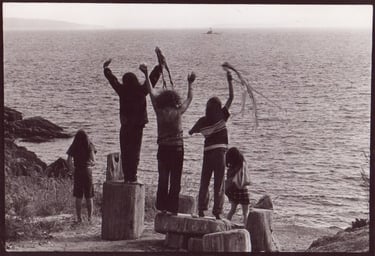
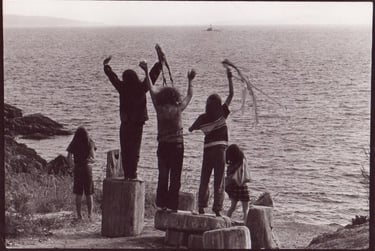
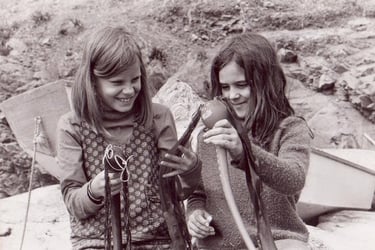
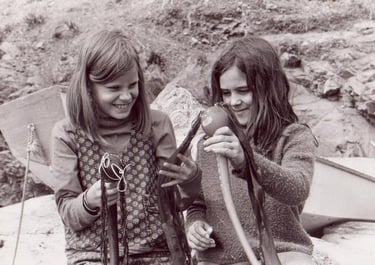
Rima Akin and Therese Bottomly with kelp; campers wave at passing boat (thumbnail).
I loved to turn over a rock and see a little shore crab scuttle along, and yes, we sometimes poked, prodded, herded, and otherwise tortured them. Perhaps in redemption for their genus, one time I was goofing around with a big red rock crab who got hold of my thumb and clamped down. I found my father who eventually removed the crab using a hammer. I shed many tears in pain, and my thumb was blue and red for a couple of weeks.
I think we used to torture Banana Slugs too; in my adult life I have great respect for their beauty and utility, but as a preteen, not so much. I likely was an unpleasant and petulant preteen causing grief not just for the fauna but also for fellow youth and adults alike. I apologize to all and would wish it off to being young. More likely, I was just obnoxious.
A Mother's "Life Goes On" Lesson
One time I flew into camp on a small plane with John Angell, Jr.—“Demi”. My mother was there to pick us up at the airstrip. Everyone piled into the car, but I realized I’d left something on the plane and ran back for it. Inadvertently, I assume, my mom headed back to camp without me. My own mother left me stranded at the airstrip!
Crying, I started the multi-mile walk back to camp. The sheriff spotted me, pulled over, and asked where I was headed. When I explained the situation, I’m fairly certain he rolled his eyes. Once we reached camp, he refused to release me to anyone but my mother, who still hadn’t noticed me missing; she apologized to the sheriff. When she turned to me, her reaction was a casual, "Oh well." If you knew my mother, this was exactly the kind of "life goes on" reaction you'd expect.
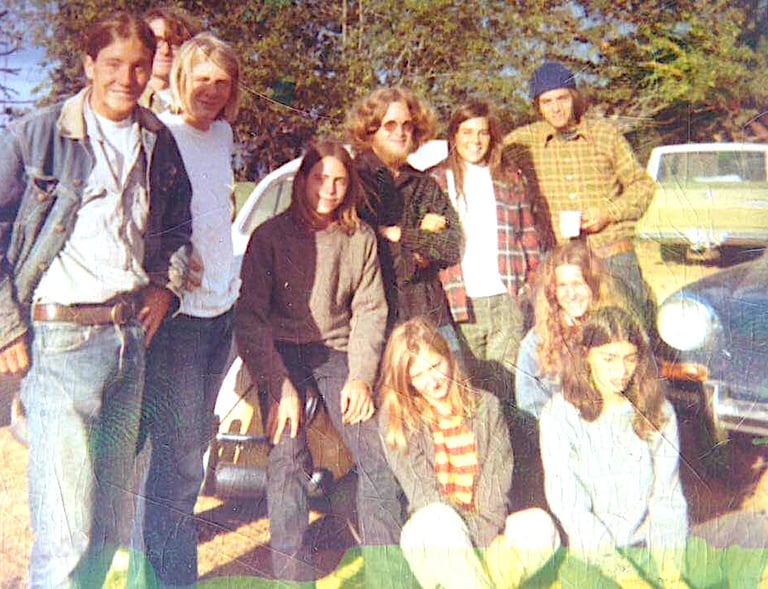
Another time at the airstrip, I was along for the ride to pick people up. Someone apparently stepped on a yellowjacket nest, and the entire group scattered, running a mile or more down the road. Several people had multiple stings; I miraculously escaped un-stung.
Mentors and Memories
I thought Bill Bowling was the tallest and wisest man in the world. It surprises my adult self to be a bit taller than he is, although I still deeply value his wisdom. Bill Rotecki was my idealized version of an outdoorsman, and kayaking adventures with him were amazing! He took us camping on Turn Island a couple of times, which was wonderful. Sylvia Wheeler’s art projects fascinated me, and Ehrick Wheeler spent time teaching me about tides, stars, and other subjects.
Many people had a huge influence on me, particularly the counselors—Bill Bowling, Bill Rotecki, Steve Hait, Cita Strauss, Sally Garrett, John Butler, Evan Kaeser, Towny Angell, Toni Russell (Angell), and Chris Hazen who introduced me to art, music, nature, and life itself. Towny and Toni getting married on the beach was a memorable occasion.
Jellyfish—Dangerous and Bioluminescent
Jellyfish were a major fascination—from the small Egg Yolks and Moon Jellies to the stinging Sea Nettle and Lion’s Mane jellyfish, a beautiful species with long flowing tentacles. We incorrectly called the latter "Portuguese Man O' War," but regardless of the species name, they packed a nasty sting and aroused a healthy “steer clear” response.
Perhaps most amazing were the Water Jellyfish, nearly indistinguishable from Moon Jellies by day, but glowing with bioluminescence at night. Witnessing one illuminate the water around a kayak was magical, as were the glowing algae. Meanwhile bioluminescent-jellyfish battles on the beach were fun, and for a preteen boy there were few things better than smearing glowing jellyfish guts on someone. The memory that truly makes me smile is being in a canoe or kayak on a dark night, watching the water glow with every dip of the paddle.
The Sky at Night
Late in every summer, strong Northern Lights were visible from camp. I thought it was cool at the time, but I didn't appreciate how truly special it was until in my adult life I learned that seeing the Northern Lights is on many people’s "bucket lists." Shooting stars were amazing, and the sheer number of stars in the sky wowed this city boy from Portland. The rainbows could be spectacular, too.
Camp counselors at Cedar Rock's first year: Luke Boswell, John Butler, Evan Kaeser, Steve Hait, Towny Angell, Toni Russell (Angell), Chris Hazen; front: unidentified (Kayla?), Cita Strauss, Sally Garrett (Marcus).
Camp Logistics
Whether drafted or volunteering, I sometimes helped with meal preparation. Despite having burgeoning cooking ability and good knife skills for a preteen, Adi was protective of me, limiting my utility. I was often relegated to opening cans and cleaning. The kitchen facilities were wholly inadequate for the planned 50 people, let alone the 200+ who might eat each day. Meals got made, but the process was often chaos.
I vaguely remember a trip or two with my father to a USDA warehouse in Portland to pick up supplies. It was full of aisle after aisle of the famed “Government Cheese,” spaghetti, cereal, and other nonperishable goods, all in plain cardboard packaging with simple black printing. My understanding is that the Camp just requisitioned whatever was needed from the aisles of plain goods, although I must admit that I was, and am, ignorant regarding Camp finances.
The outhouse, christened “Robinson Crusoe” by John, was entirely inadequate for the camp population but offered interesting graffiti that a prepubescent boy enjoyed, and a beautiful view of Friday Harbor. General Camp sanitation was fine for a preteen boy, but my adult self shudders at the thought.
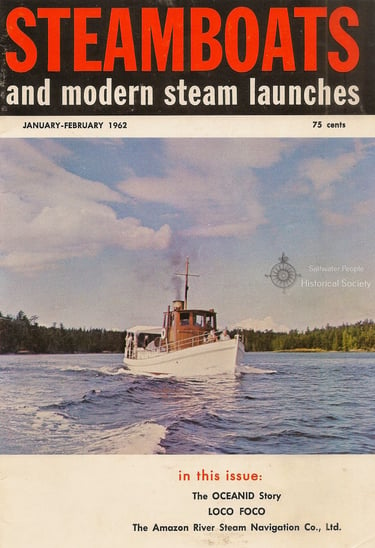
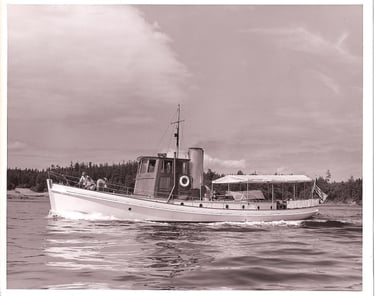
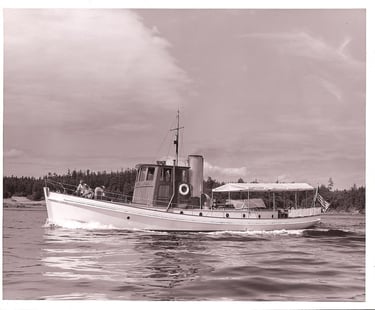
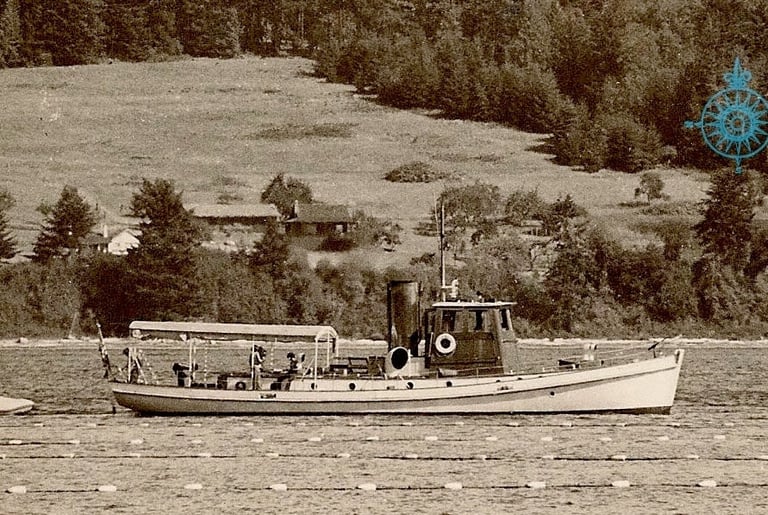
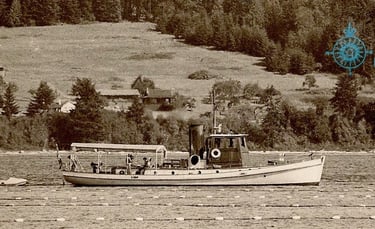
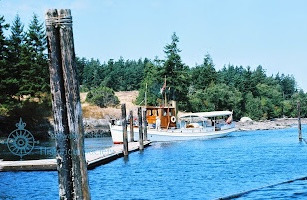
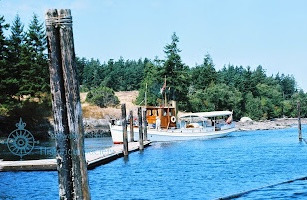
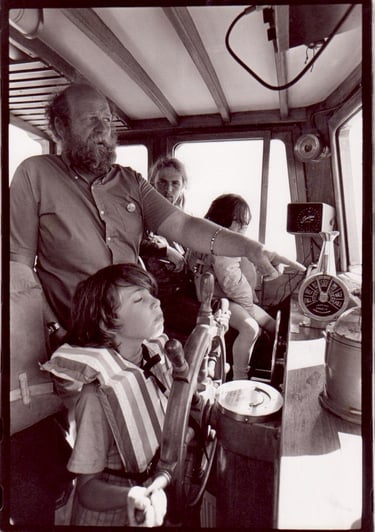
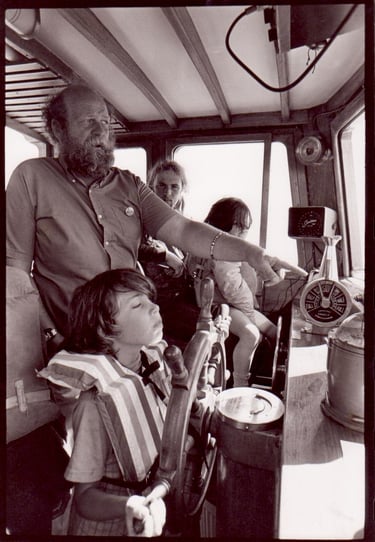
Oceanid on the cover of 1962 Steamboats magazine; Oceanid under steam and underway; Oceanid's cockpit with John Angell commanding, Garth Williams at the helm, and Tafflyn Williams navigating; Oceanid at former Squaw Bay home port.
Island Transportation: Roads and Routes
The roads on Shaw Island are characterized by their narrowness—some paved, most gravel. They primarily serve local residents for trips to the ferry, the general store, or occasional visits to neighbors. Traffic was generally light, and drivers were rarely in a hurry.
I was pre-driving but some of the people at camp had vehicles and liked to go for joyrides around the island; sometimes I was invited along. These excursions occasionally involved speeds faster than advised for the roads, sometimes people in the vehicles got loud in one way or another, and sometimes other events happened that might not have been, strictly speaking, legal. As a rule, the locals could have done with less of this activity.
Bicycles were a popular alternative mode of transport:
Riding the tandem bike was fun with the right partner, although challenging with the wrong one on the island's hills.
Group trips sometimes went to Lopez Island for easy rides or to Orcas Island to tackle the demanding Mt. Constitution, which was an accomplishment that older me looks back on with pride.
I don’t remember how we got to the other islands, but the ferry or the Oceanid were really the only options for moving a group of any size. I think with bikes, ferries were more likely.
It’s roughly a four-hour drive from Portland to Anacortes, WA, which was and is the nearest ferry terminal, so that meant a four-hour bus ride, a wait for the ferry, then a 90-minute ferry ride. It was a long and perhaps exotic day for most campers; I think John drove the bus most of the time and that could be entertaining I’m sure, but ending up in a strange coastal paradise and sleeping in a tent or under the stars or whatever, I’m sure was disconcerting, with reactions ranging from fright to delight.
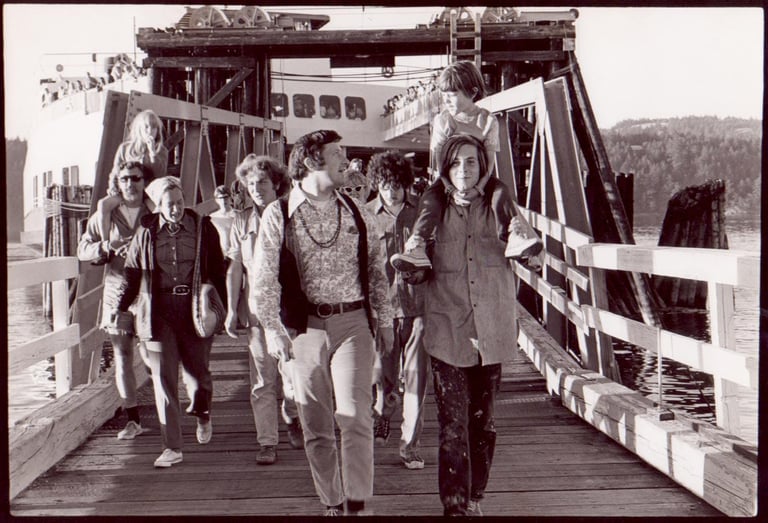
I rode with my parents or (on a couple of occasions) flew to Shaw. The Washington State Ferry system was the main way to and from Shaw; I loved watching the seemingly complex "jigsaw puzzle" of vehicle loading and unloading on the ferries, the sound of the engines, and the "gourmet" food from the galley during the hour-and-a-half trip from Anacortes.
Coming off the Ferry: Bill Avalia, Gaetana Avalia on shoulders, Adi Angell, Mike Gregory, Michael Ross, Chris Hazen, Adam Ross on shoulders; Christopher Dubay on the beach, farmhouse behind.
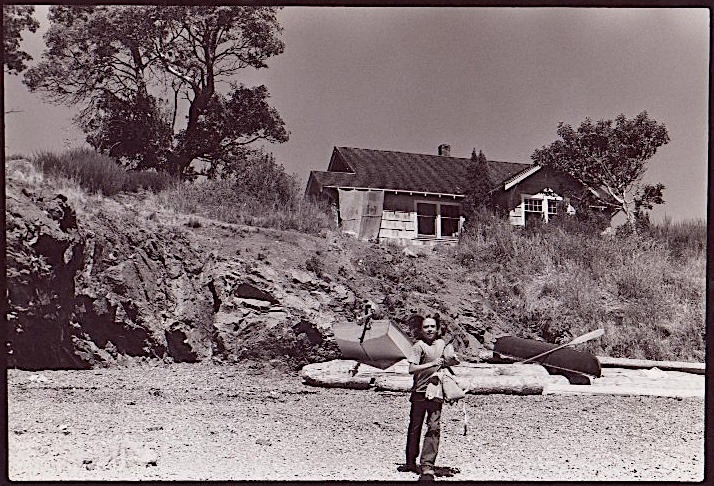
As I look back, I think through a present-day lens there is no way we could do half the stuff that went on; I can’t imagine the liability insurance, or the health inspections; but in the context of the early '70s “counterculture” (whatever that means to you), I’m not sure we were that far out of the mainstream.
There are some stories from others (the "buttons" on this page), and a few photos—a huge thank you to everyone who has contributed; I know other people have memories and photos and I, for one, would love to see them as otherwise the history of Camp Cedar Rock fades into the rearview.
It was a fantastic way to spend our summers. August meant the coming end of the season and the work of breaking down camp, packing things up, heading home, and a return to the real world—although with MLC, the Shire, and the Village Sub Shop, the real world was interesting too.
– Jevan Williams, December 2025
[Jevan also wrote a piece in 2018 for the 50th Anniversary publication]
My Keepsakes
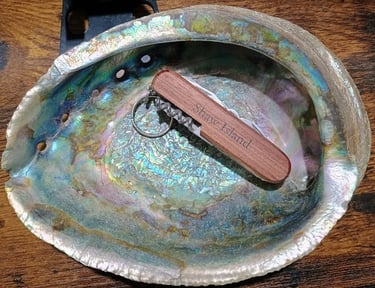
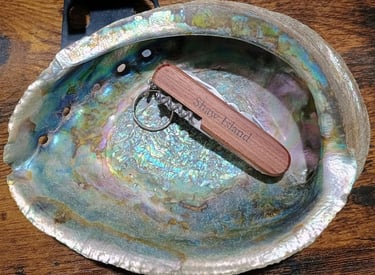
My Shaw Island mementos ... I have an abalone shell from back then that I found washed up on the beach which serves as a dresser organizer and a reminder of the good old days, and a more recent vintage “Shaw Island” pocket knife given to me by the aforementioned Bill Bowling. I have a beautiful map of the San Juans on my bedroom wall, so I guess I’m a bit nostalgic. Other than my bracelets, I’m not sure what else I would want as a keepsake; I didn’t get into photography until after our time at Shaw; I’d love a photo of Don (or even to remember his last name)—and I’d love to see any of your photos!
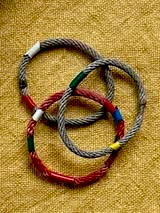
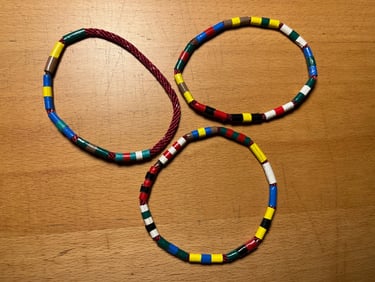
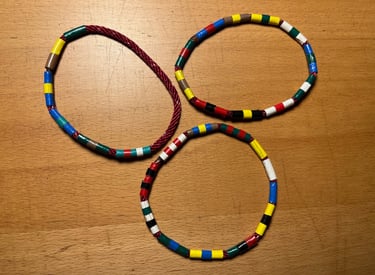
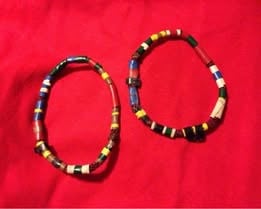
Bracelets: Susie McDevitt; Delia (Lane) Paine; Sam Lowry; above: the shed where bracelets and tape happened.
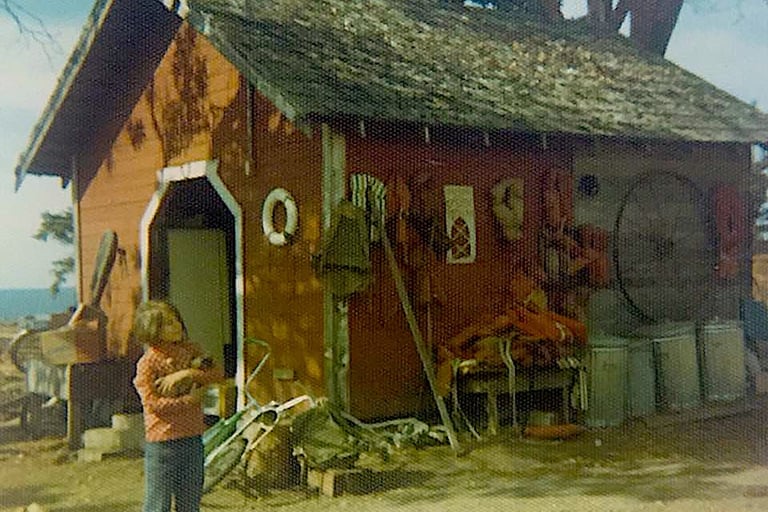
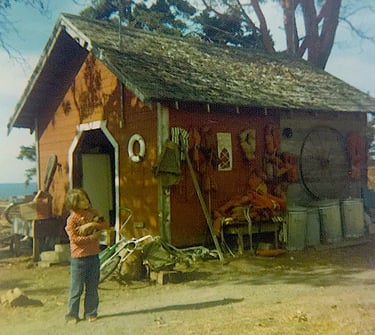
I love that people have sent in photos of theirs. They were an amazing device to get people to try things. The fact that we have photos of several bracelets that people earned over 50 years ago—little nylon loops with colorful bits of plastic tape signifying what the camper had done—shows what memorable keepsakes they became. I wish I had mine and I wish we had a photo of the chart of activities!
The Famous Activity Bracelets
The famous bracelets. I could be wrong, but I think the general idea, to offer incentive to campers to do activities by having a nightly awarding of kudos, belonged to Adi. The idea for bracelets, plastic tape, a chart of activities, etc.—that was all John. The awarding of tape was a nightly camp highlight; campers lined up in the little shed across from the farmhouse, John with a blowtorch to melt the nylon to form the bracelet to place on the camper’s wrist the first time they earned some tape, or when they had filled one and needed another. People looked at the posted chart showing the schedule of sights and activities that earned tape, then John would put the corresponding colored tape onto the bracelet. Occasionally a camper or campers would come up with something new that John agreed was tape-worthy, and he would designate a new tape pattern for it and add it to the chart.
Daily Camp Life and Entertainment
I suspect most campers didn’t know, but there was a TV on the property, my dad’s tiny black-and-white. It was in the attic of the “Farmhouse,” over by the window; I’m pretty sure it was there because that was the only place it could get any reception, and then only a couple of channels. We almost never used it, but I remember watching portions of the 1972 political conventions on it.
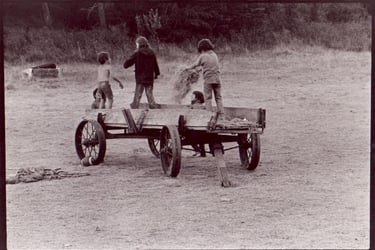
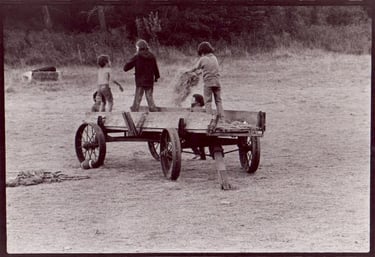
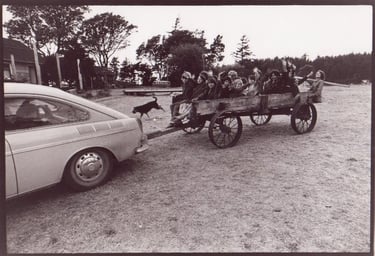
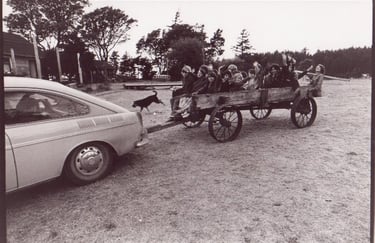
Hay rides were a nightly occurrence, weather permitting; John would hitch that rickety wagon to Adi’s VW and drive it around the pasture. People flew off sometimes, but hey, nobody died. Also, I’m fairly certain going on a hayride got you some plastic tape on your bracelet.
Under John, the ringmaster, campfires at Camp Cedar Rock transcended the usual fare. Sure, we had the staple S'mores and classic songs, but with John at the helm and the MLC talent pipeline, the evenings were guaranteed to be more entertaining than at other camps. The talent on display was truly next level, ensuring every night crackled with energy and an atmosphere that felt electric.
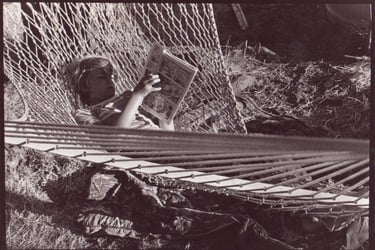
For the most part, summer in the San Juans features spectacular weather. But the occasional dreary, rainy day at Camp Cedar Rock could leave us cooped up and searching for something to do—mostly playing games, doing art, or just reading. I could always go to the family tent and read.
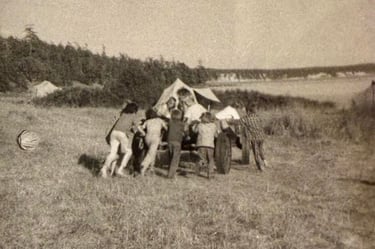
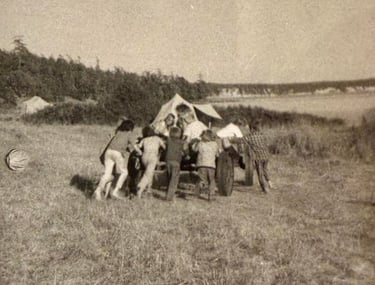
Jevan's keepsakes; campers and hay wagon head toward Williams family tent.
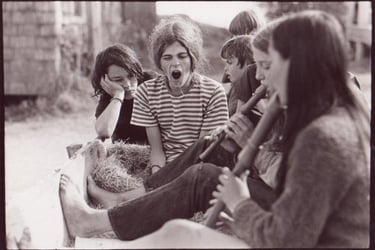
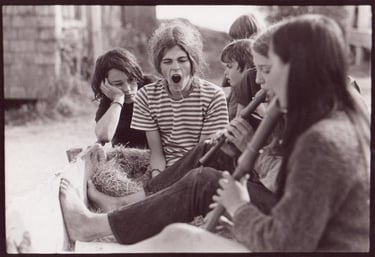
The article below, from the August 7, 1972 edition of The Oregonian, was preserved by Chena Taylor and came to light in August 2026. All six of its photos also appear in this post. Jevan Williams observes: "I wonder what was said to the reporter and what was interpretation! I am fairly sure much of it is propaganda. 'Underprivileged' was a grant parameter, but the founders made sure anyone who wanted to could come regardless of income. It does add greatly to my understanding of the finances. Fish were caught, but nothing that was feeding the camp. The article is a wonderful artifact!"
Bald Eagle Sighting and Nest Spotting could earn you some tape. I still love seeing Ospreys, Blue Herons, and other birds. I think spotting a Black-Tailed Deer got you some tape.
The water of Puget Sound is cold, roughly 50 degrees, but a dip in the water got you some tape so many people did it. Some late-night mischief led to my first experiences with skinny-dipping. The water remained cold!
Reflections
I remember the comings and goings, the relative calm as one busload of campers left and the roughly 24 hours until the next group arrived. I'd scan the list of incoming campers and wait anxiously for the next cohort of friends/playmates to arrive. Perhaps it was even more magical to experience it for ten days, then head back to real life, but I’ll never know. I spent roughly 300 days camping over the course of those three summers; we were hardly roughing it, but it was different.
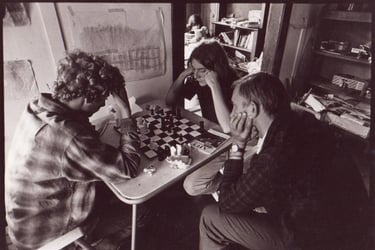
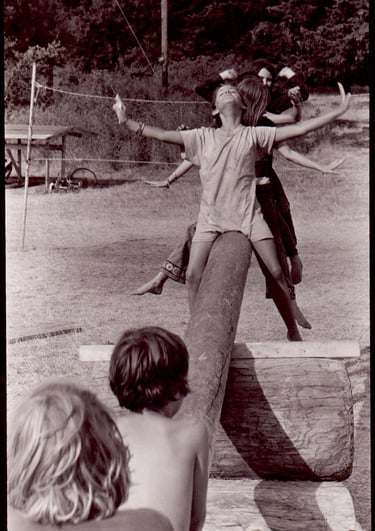
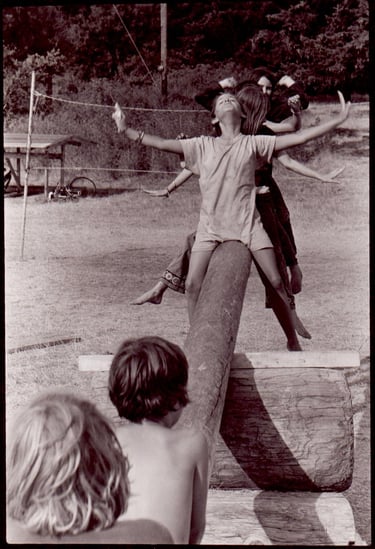
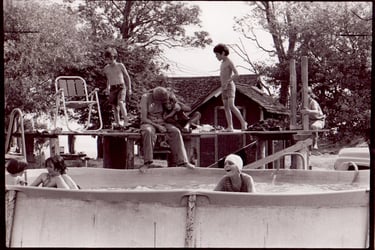
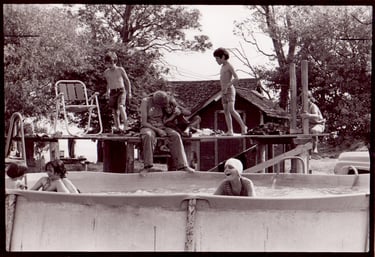
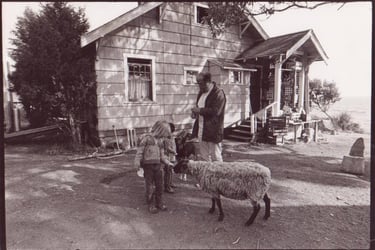
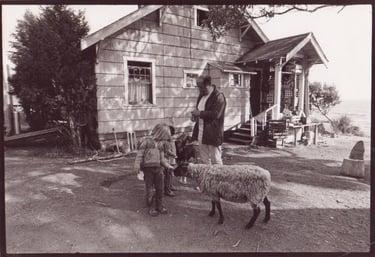
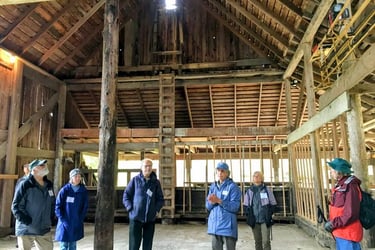
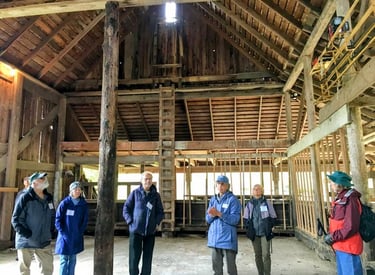
Other forms of entertainment were volleyball, tetherball, “Marco Polo” and “Chicken Fights” in the pool, teeter-totter, Field Games, various forms of tag, Red Rover, British Bulldog; Mother-May-I, Liar's Dice, puzzles, Cribbage, Hearts, Spades, and other card games; Chess, Checkers, and other board games; Rose Hips the pig, Salty the sheep, and Bo & Jangles the horses. I found the barn kind of creepy, but Barn Owls fascinating.
Adi's VW pulling the wagon on a hayride
Here are stories (with photos) that other Cedar Rock alumni told or sent in to Jevan—click on each button to read.


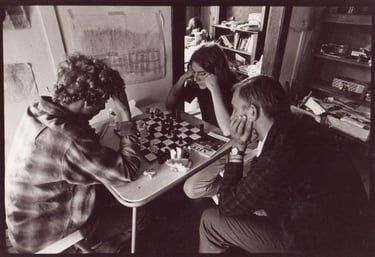
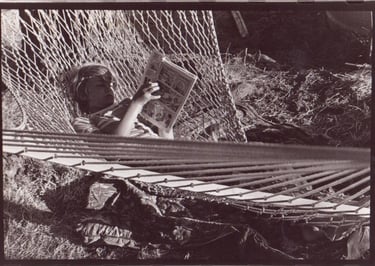
Ursula Galaher and Wendy Mick playing flutes, Chena Taylor yawning and Blaine Ross with head in hand; Tommy Taylor and (possibly) Stuart Meighan playing chess in the Farmhouse, Dave Williams watching; Tom Lea in the Hammock; the Teeter-Totter with Volleyball Court in background; Barn interior, present day; the Hay Wagon, at rest; the Pool—Beth Hoffman and Kathy Wallace in the water, Jason Moody, Marga Taylor and Scott Moody on the deck, Libby Shapiro climbing the ladder; Carlos King and Kermit Santos pet Salty the Sheep while John Angell looks on.