
Alumni
Ken Dragoon
Renewable energy engineer and advocate (at MLC 1968-74)
MLC on the Road to Life
The early years of MLC are gone. It’s now more structured, less free-wheeling. The increased formality ensured fewer students falling through the cracks, but those “free school” times were transformational for me. I went from being an entirely passive recipient of an education, to taking responsibility for my education and myself.
I started at MLC in 1968, its very first year, along with my three brothers. I wasn’t terribly excited to be switching schools, but my older brothers were having trouble at Cleveland High. One student, a neighbor, was beaten by jocks at the instigation of a football coach for his long hair and antiwar activism. Other students were suspended for handing out leaflets opposing Vietnam. My mother wrote to the superintendent objecting to the threat to suspend one of my brothers for having long hair.
One teacher, Abe Bialostosky, had his own school-within-a-school at Cleveland for disaffected students, which my brother attended. Abe became one of the founders of MLC, teamed up with Emil Abramovic. My parents, lefties from the time of Roosevelt, jumped at the opportunity. My older brothers were excited, but I was just twelve and getting along fine, if quietly, in the sixth grade at Sellwood Elementary.
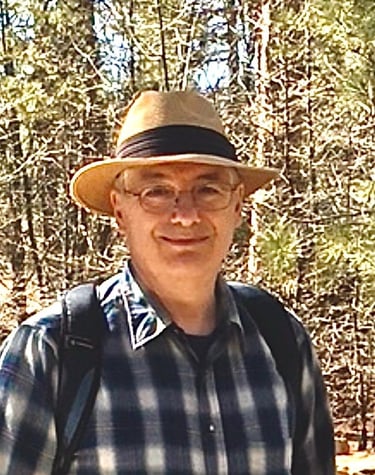
Ken Dragoon
KEN DRAGOON told his story in March 2026:
I marvel at my parents’ boldness in sending us to MLC that first year. It was patterned after the Summerhill school in Britain that posited students learn best if allowed to follow their passions and learn at their own pace. Gathered into the auditorium on the first day of school, we were told there would be no classes except those we ourselves organized. Though shocking, if not horrifying, this probably served me well, freeing me to pursue my unquenched passion for math and science that Sellwood barely touched. At MLC, I was released to mold my own education. Despite the chaos and lack of classes, in a school where attendance was barely noted in that first year, MLC's challenge left its indelible mark on me for which I am forever grateful.
Of the five original teachers, Emil became my favorite, his room festooned with science-related materials from stuffed birds, to magnifying glasses, to live guinea pigs. More than a half century later, I remember the thrill and mystery of his brainstorming and inventors' workshop classes, which he organized pretty early on. I have used techniques I learned in them ever since, developing ideas, eliciting ideas from colleagues. I learned to cook on an MLC field trip to Camp Westwind. One parent-taught class had us plan lunches on a budget then shop for ingredients and make our own lunches—invaluable life skills that came in handy at college. Emil got hold of a piece of land where we started a community garden from scratch, which taught me the pleasures of gardening and love of fresh vegetables; I’m healthier for it.
We moved away after spending four years there. I attended a very traditional high school, Stevenson, in Washington. The prospect of going back to a traditional school with competition and grades was scary. I hadn’t taken a formal class with grades in the four years at MLC. I was sure I would be behind.
Somehow, MLC was not lost time after all. I ended up actually helping my fellow “advanced algebra” students understand the impenetrable explanations offered by the wrestling coach serving as the algebra teacher. To my utter surprise I became a straight-A student, even getting an A in US History, which I thought I knew nothing about. What were those students doing for four years while I was, or at least thought I was, just messing around?
In retrospect, in “just messing around” I had managed to take a math class or two (without any grades or tests), studied for and obtained an amateur radio license, assembled a radio transceiver kit, and built a “homebrew” transmitter. I'd read historical novels and lots of electronics books. I concluded that the most important thing to learn in school is to love learning. Our time in school is short, but if we love learning, we’ll do it all our lives!
I ended up dropping out of high school early in my senior year, when the school counselor offered to get me into two-year Clark College in Vancouver. My little brother had been killed over the summer by a drunk driver, and while I had underestimated the psychological toll of being surrounded by students and teachers aware of the loss, the teachers and counselors understood it would likely be unbearable to continue there—and they were right. I left and had an emotionally difficult but rewarding first year of college.
I wanted eventually to go on to a four-year college but wasn’t sure how I'd do that without a high school diploma. In our fear of failure on leaving MLC, my brother and I had prearranged that the school would take us back if it didn’t work out for us at Stevenson. But MLC agreed to give me a diploma based on work I had done at Stevenson and Clark and I graduated from MLC two years after I had last set foot in the place!
My MLC diploma took me to Evergreen State College, already familiar to MLC graduates by then. After a year there, I wanted a school with more physics and again faced trying to get into a traditional school with no formal grades from Evergreen. I made an appointment with the student advisor at the University of Washington in Seattle. My reception was not exactly warm. He was shocked that an undergrduate non-student was able to get an appointment with him at all. He gave me five minutes, advised that I couldn’t possibly have learned anything useful at Evergreen, and ushered me out of his office.
I had also arranged to visit Western Washington University (Western Washington State College at the time). I was warmly welcomed by the Physics Chair, who literally spent hours with me; when interrupted by having to teach a class, he got another professor to talk with me. Asked what we would do about my lack of standardized courses and grades, he told me to just start out wherever I thought I would fit into their program, and if it didn’t work out, take some earlier courses. Western’s beautiful campus overlooking Bellingham Bay capped the day with a late sunset. Guess where I went?
In my senior year at Western I got a chance to do a three-month stint as a research associate at Argonne National Laboratory near Chicago. I worked in the fusion energy program, specifically with energy storage in superconducting electromagnets deemed necessary to contain fusion reactor plasma fuel. Great fun! I managed to graduate magna cum laude.
Graduating was gratifying, but I knew nothing about finding a job. Jobs with the military were attainable, but not what I favored in the shadow of the regrettable Vietnam War. It was tough to return home and live off my parents during what turned out to be a six-month job search (I had managed not to be a burden during my college years: my parents were retired with very little income, qualifying me for grants I didn’t have to repay, and modest low-interest loans).
There was a tantalizing moment when Hughes Aircraft showed interest in hiring me to work on the Galileo mission to Jupiter. It took them months to finally say they couldn't hire me. That was crushing; I gave up on finding a career job and chose to work as a fire fighter with the US Forest Service, something I had a bit of experience with from working on state fire crews during a couple of summers at college. But I forgot I'd applied for a job I saw in my phsyics magazine. Just a week before I was off to the Forest Service, I was flown to Michigan for an interview.
That job was with Schlumberger Well Services (a company I knew coincidentally as the transceiver I'd built came from a branch of their corporation). I was hired as a field engineer responsible for determining whether newly drilled wells held production quantities of oil or gas. I worked there for nine months before quitting to start graduate school.
I entered the doctoral program in physics at the University of New Hampshire to specialize in space physics. I was working for a professor studying the link between the aurora and the earth’s magnetic field. After two years, I passed the doctoral entrance examination, but had become disaffected by the esoteric nature of the work and left with a master’s degree in 1982.
In the 1970s, my mother had urged me to get into renewable energy. It seemed unrealistically expensive at that time, and the science behind it uninteresting. But by the time I got my master’s degree I was less concerned about doing cutting-edge science, much more interested in finding a job that would take me back to Portland to be around my aging parents. After another short panic, I got a job in Portland with the Bonneville Power Administration.
I worked at Bonneville for almost fifteen years, and at the large electric utility PacifiCorp for nine after that. At Bonneville, I was initially involved with running computer models of the Northwest’s hydro power system, looking at the effects of altering operations to increase spring flows to mimic natural runoff (i.e., absent reservoirs) needed to flush newly hatched salmon to the sea.
At PacifiCorp I had several jobs, eventually allowed to work on researching, then acquiring, wind power, which had become economically feasible. Next I worked for a nonprofit trade association promoting renewable power, and found time to write a book on assessing costs associated with accommodating the variability of wind in power systems. After a few more employers I founded a trade association promoting use of renewable electricity to make hydrogen, which can be stored and used as a fuel to produce power when sun and wind aren’t enough to supply demand. The association is weathering the current administration’s inability to recognize climate change and the need for renewables; I’m very proud it’s still around after eight years, and counting.
What did MLC have to do with all this? First and foremost, it brought me out of my shell to take responsibility for my own education. It helped me become proactive not just in learning but in my career. It gave me lifelong friends. And it gave me my dear Emil, who once said of himself, “I am never bored”; me either Emil! I can’t help but think of him when faced with an intractable problem, calling for a brainstorm.
[Ken also wrote a piece in 2018 for the 50th Anniversary Publication]